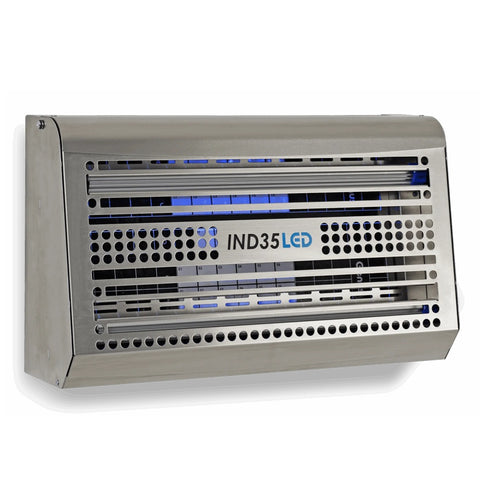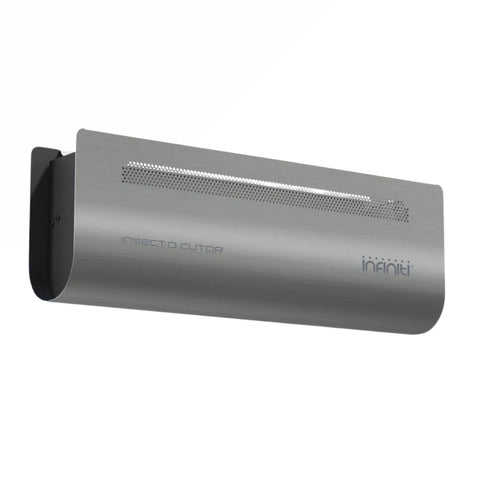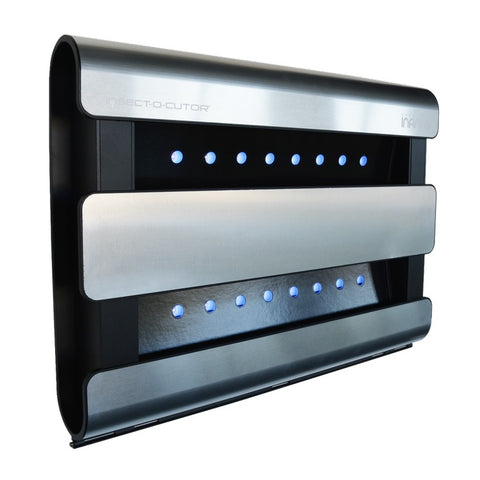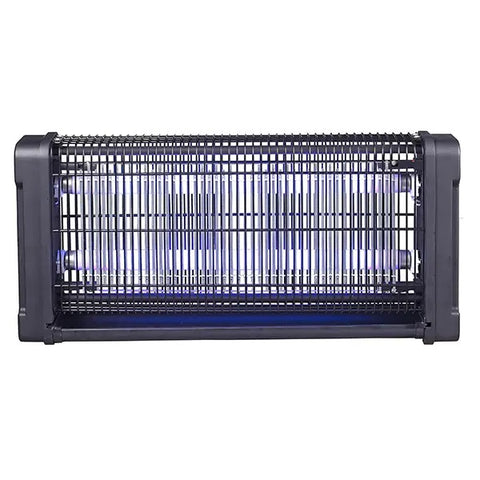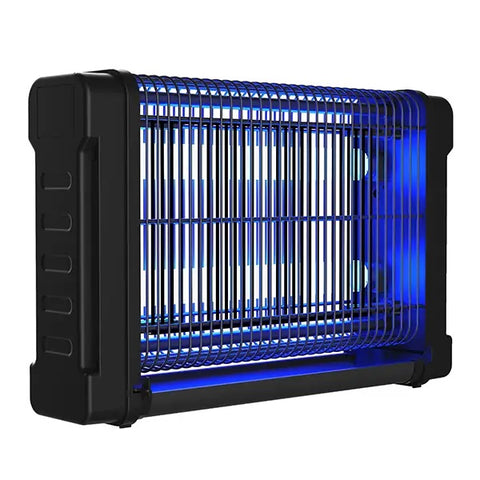
LED Fly Killers
Advantages of LED vs Traditional Fluorescent Tubes
1. Superior Energy Efficiency
Traditional fluorescent tubes are energy suckers. They emit light in 360 degrees (wasting half the light against the back of the unit) and lose a lot of energy as heat.
LED Advantage: LEDs are directional, meaning all the light is focused outward where the flies are. Most LED units consume about 50% to 70% less electricity than fluorescent models. Over a year of 24/7 operation, that’s a significant dent in your utility bill.
2. Longevity and Maintenance
If you’ve used traditional units, you know the drill: you have to change the bulbs every year because the UV coating degrades, even if the bulb is still glowing blue.
LED Lifespan: An LED strip typically lasts 3 years (approx. 25,000+ hours), whereas fluorescent tubes lose their "attractiveness" to flies after about 9–12 months.
Less Waste: You’re throwing away fewer glass tubes (which often contain mercury) and spending less on replacement parts.
3. Faster Fly Attraction (The "Bio-Lure" Effect)
Fly vision is tuned to specific wavelengths. Traditional tubes output a broad spectrum of UV, much of which flies don't actually care about.
Precision Output: LED technology allows manufacturers to peak the light output at exactly 365nm, which is the "sweet spot" for a housefly’s visual receptors.
Consistency: Unlike tubes that flicker and dim over time, LEDs maintain a consistent "flicker-free" output that is much more enticing to insects.
4. Environmental & Safety Impact
Traditional UV tubes are essentially specialized fluorescent lights, which come with hidden headaches.
Mercury-Free: LEDs contain zero mercury. If a tube breaks in a kitchen, it’s a hazmat situation; if an LED unit is damaged, it's just broken plastic and metal.
Durability: LEDs are solid-state electronics. They don't shatter like glass tubes, making them much safer for food prep environments.